
Water finds every weakness in a building envelope. A roof, a balcony, a foundation, or a water tank left unprotected will eventually let moisture through — and once it does, the cost is rarely limited to the surface. Structural damage, halted production, and non-compliance with hygiene regulations can all follow from a waterproofing system that wasn’t built to last. Two component waterproofing systems exist to close that gap. Find out what a two component waterproofing system actually is, where they are used, and which MPM solutions are built for the job.
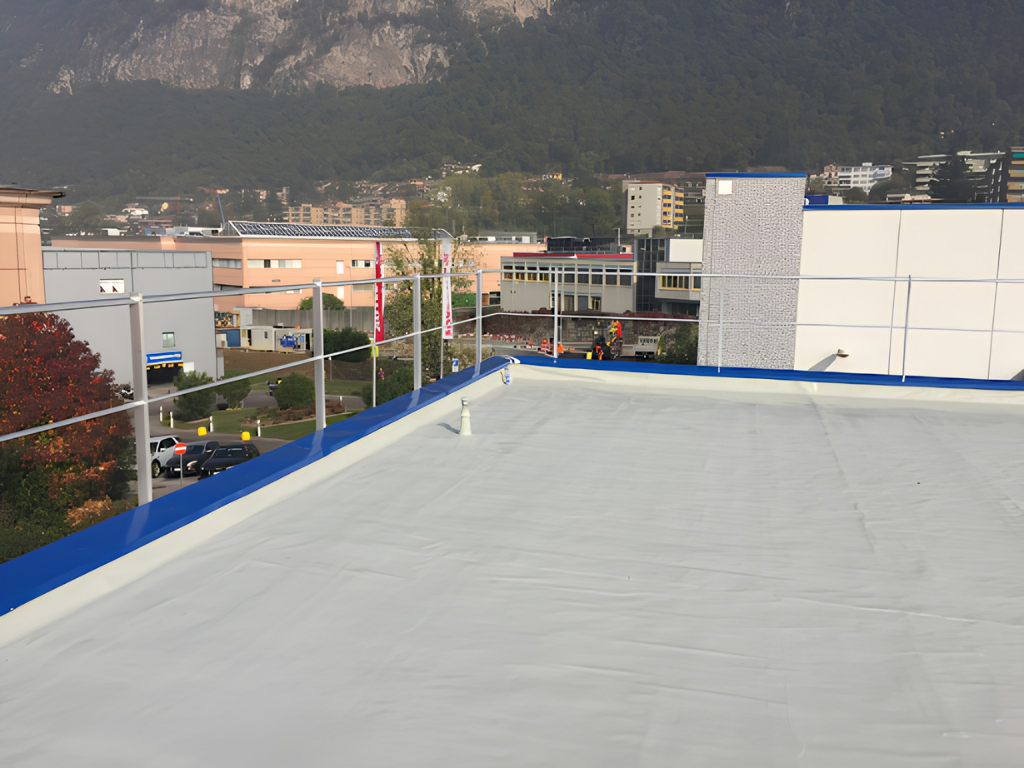
On this page, you’ll find out:
- What Is Two Component Waterproofing?
- Two Component Polyurethane vs Other Waterproofing Systems
- Where Two Component Waterproofing Systems Are Used
- How to Apply a Two Component Waterproofing System
- MPM Two Component Waterproofing Solutions
What Is Two Component Waterproofing?
A two component (2K) waterproofing system is made of two separate parts — usually labelled component A and component B — that must be mixed on site immediately before application. Once combined, a chemical reaction begins that cures the mixture into a continuous, seamless waterproof membrane or coating.
This is the key difference from one-component (1K) products, which come ready to use and cure by reacting with moisture or air already present in the environment. A 1K membrane is simpler to apply and doesn’t require mixing, but its curing speed and final performance depend on ambient humidity and temperature.
A two component polyurethane waterproofing system, by contrast, cures independently of those conditions: the applicator controls the reaction by controlling the mix, which typically translates into faster curing, more predictable results, and — in most formulations — higher mechanical strength, chemical resistance and elongation at break.
Two component technology spans several chemistries, the most common in professional waterproofing being polyurethane, polyurea(and polyurea-polyurethane hybrids), and cementitious mortars. Each behaves differently in terms of flexibility, application method and ideal use case, which is exactly what the next section compares.
Two Component Polyurethane vs Other Waterproofing Systems
Choosing the right waterproofing technology depends on:
- The substrate
- The exposure conditions
- How the treated surface will be used once finished
The table below compares the three system families most commonly specified for professional waterproofing projects.
| System type | Curing mechanism | Elasticity | Best suited for |
|---|---|---|---|
| Two component polyurethane / polyurea | Chemical reaction between resin and hardener | High — good crack-bridging even at low temperatures | Roofs, tanks, industrial floors, structures with vibration or thermal movement |
| Two component cementitious mortar | Chemical + physical curing of cement-based slurry | Low to moderate — rigid or semi-flexible | Below-ground tanking, wet rooms, masonry and concrete substrates |
| One component liquid membrane | Reacts with ambient moisture or air | Moderate to high, depending on formulation | Fast, simple applications where mixing on site isn’t practical |
Two component polyurethane and polyurea systems tend to be the specification of choice whenever the structure is exposed to standing water, aggressive chemicals, or significant thermal cycling — conditions where a rigid or moisture-dependent product would be more likely to crack or under-perform over time.
Want to know more about two component polyurethane waterproofing applications?
Where Two Component Waterproofing Systems Are Used
Because curing doesn’t depend on ambient conditions, two component systems are specified across a wide range of building types and industrial environments, including:
- Roofing— flat and low-slope roofs exposed to standing water and UV radiation
- Terraces, balconies and walkable surfaces where foot traffic and weathering combine
- Foundationsand basements, protecting below-ground structures from rising damp and water pressure
- Water tanks and hydraulic structures, including drinking-water-approved applications
- Car parks and industrial floors subject to vehicle traffic and chemical spills
- Production plants in the food, pharmaceutical, automotive, electronics and logistics sectors, where a failed floor or roof can mean lost production time and, in regulated industries, non-compliance with hygiene standards
For facility managers and operations teams, the case for a two component system is rarely just about keeping water out — it’s about avoiding the production downtime, remedial costs and compliance risk that come with a waterproofing failure.
Want to use our two component polyurethane waterproofing systems for your projects?
How to Apply a Two Component Polyurethane Waterproofing
While exact mixing ratios, consumption rates and curing times vary by product — always refer to the specific technical data sheet before starting a job — the general application sequence for a two component waterproofing system follows the same logic:
- Substrate preparation: the surface must be sound, clean, and free of dust, oil, grease or loose material; mechanical preparation (sandblasting, shot blasting, or pressure washing) is typically required depending on the substrate.
- Primer application: choosing the correct primer for the substrate (concrete, metal, bituminous membrane, tile, etc.) is critical for adhesion and is usually a separate, substrate-specific step.
- Mixing: component B is combined with component A using a low-speed mechanical mixer (or, for spray-applied polyurea systems, a heated bi-mixer unit) until fully homogenised.
- Application: by roller, brush, trowel or spray, depending on the product and the substrate — usually in two or more coats to reach the specified dry film thickness.
- Curing and protection: each two component product has its own pot life, tack-free time and full-cure period; protecting freshly applied material from rain, foot traffic or contamination during this window is essential to a defect-free result.
Because these parameters differ significantly between a fast-curing sprayed polyurea and a trowel-applied self-levelling compound, working from the correct technical data sheet — not general assumptions — is what separates a system that performs for decades from one that fails early.
MPM Two Component Waterproofing Solutions
Two component waterproofing systems give designers, applicators and facility managers a level of performance and control that one-component alternatives can’t always match — but getting the right product, primer and application method matched to your substrate is what makes the difference between a system that lasts and one that doesn’t.
MPM has been developing protective solutions for the construction industry in Italy and across Europe for over 70 years. Within our waterproofing range, the following are two component polyurethane systems, verified against their official technical data sheets:
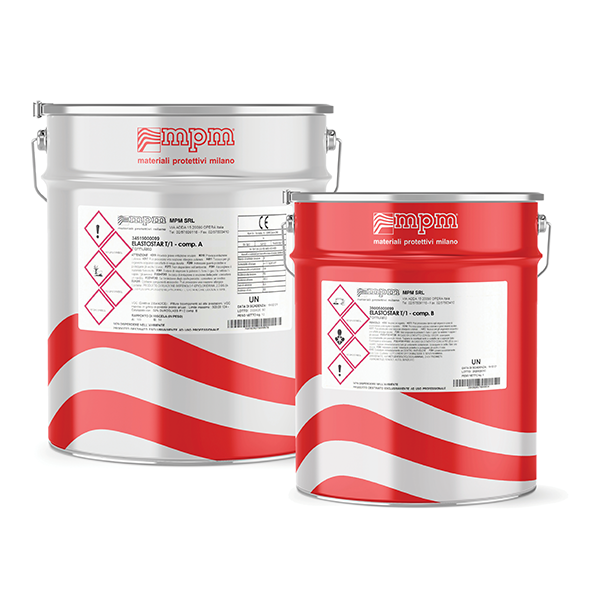
Elastostar T/1 — 2-Component Waterproofing Coating
It offers excellent resistance to immersion in fresh and sea water, and good resistance to immersion in moderately aggressive industrial wastewater.
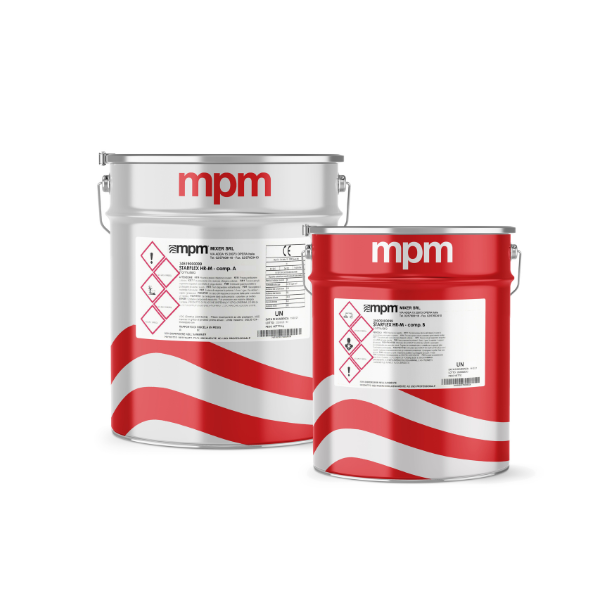
Starflex HR-M — 2-Component Waterproofing liquid polyurea membrane
A high-performance two-component waterproofing polyurea membrane designed for cold, manual application. This self-leveling liquid system forms a seamless, highly elastic barrier that delivers exceptional resistance to abrasion, wear, and mechanical stress, making it the ideal two-component waterproofing solution for protecting parking decks, balconies, and terraces.
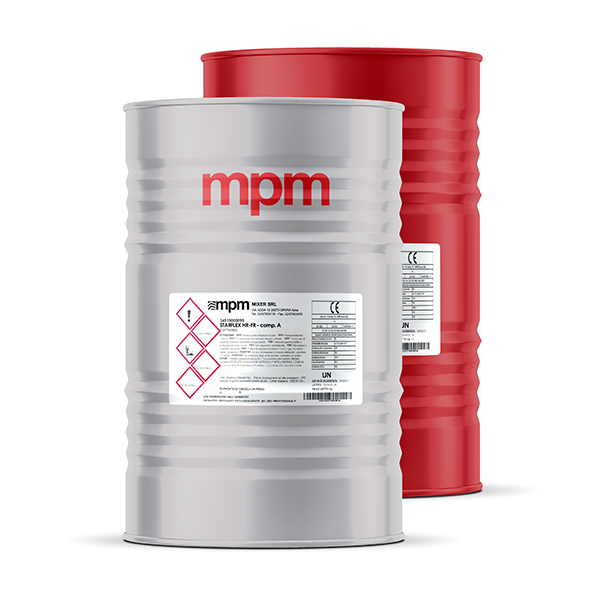
Starflex HR – FR — 2-Component Pure Polyurea System
A solvent-free, hybrid polyurea system engineered for fast curing and high elasticity. It is spray-applied for fire-certified waterproofing of civil and industrial roofs and coverings, and is suitable for concrete, fibre cement, tiles, bituminous membranes and metal substrates.
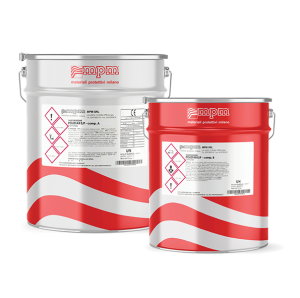
Polistar E/P — 2-Component Aliphatic Polyurethane Top Coat
A UV-resistant, non-yellowing finish designed to protect polyurethane and polyurea waterproofing membranes from the STARFLEX line, preserving gloss and colour over time — ideal as the final protective layer on bridges, viaducts, and exposed concrete structures.
Not sure which of these fits your project? MPM’s technical team can help you match the right two component systems to your substrate, exposure conditions and application method!
Frequently Asked Questions
What’s the real difference between a two component and a one component waterproofing membrane?
A two component product cures through a chemical reaction triggered when its two parts are mixed, giving the applicator control over curing speed regardless of weather conditions. A one component product cures by reacting with moisture or air already in the environment, which makes it simpler to apply but more dependent on ambient conditions for consistent results.
How long does a two component polyurethane waterproofing system last?
Correctly specified and applied, two component polyurethane and polyurea waterproofing systems are designed to protect structures for decades, thanks to their resistance to UV exposure, chemical attack and mechanical wear. Actual service life depends on the specific product, substrate conditions and exposure — refer to the relevant technical data sheet and application guidance for the system in question.
Are MPM’s two component waterproofing products certified for European standards?
MPM’s waterproofing range is developed to meet relevant European technical standards for construction products, and several products in the range — including systems suitable for contact with drinking water — carry specific certifications. Certification details are listed on each product’s technical data sheet and Declaration of Performance.
Can two component systems be applied to damp or uneven substrates?
It depends on the specific product and primer used. Some two component systems in the MPM range are formulated with substrate-specific primers precisely to address damp, uneven or previously coated surfaces — the right combination should always be confirmed against the technical data sheet or with MPM’s technical support before starting work.
How soon can a two component waterproofing coating be walked on or put into service?
Walk-over and full cure times vary by product, temperature and film thickness — sprayed polyurea systems can be walkable within under an hour, while trowel-applied compounds may need days before reaching light traffic readiness. Always check the curing data on the specific technical data sheet before opening the area to traffic.
Contact us for support and offers

MIXER SRL – mpm division
Via Adda 15, 20073 Opera (MI) – Italy
Email: info@mpmsrl.com
Privacy & Cookie Policy
Contacts
Ph. +39 02 57609116 – +39 02 57601225
Fax +39 02 57603410
REA: MI – 1797438 – VAT N.: 09351720157
